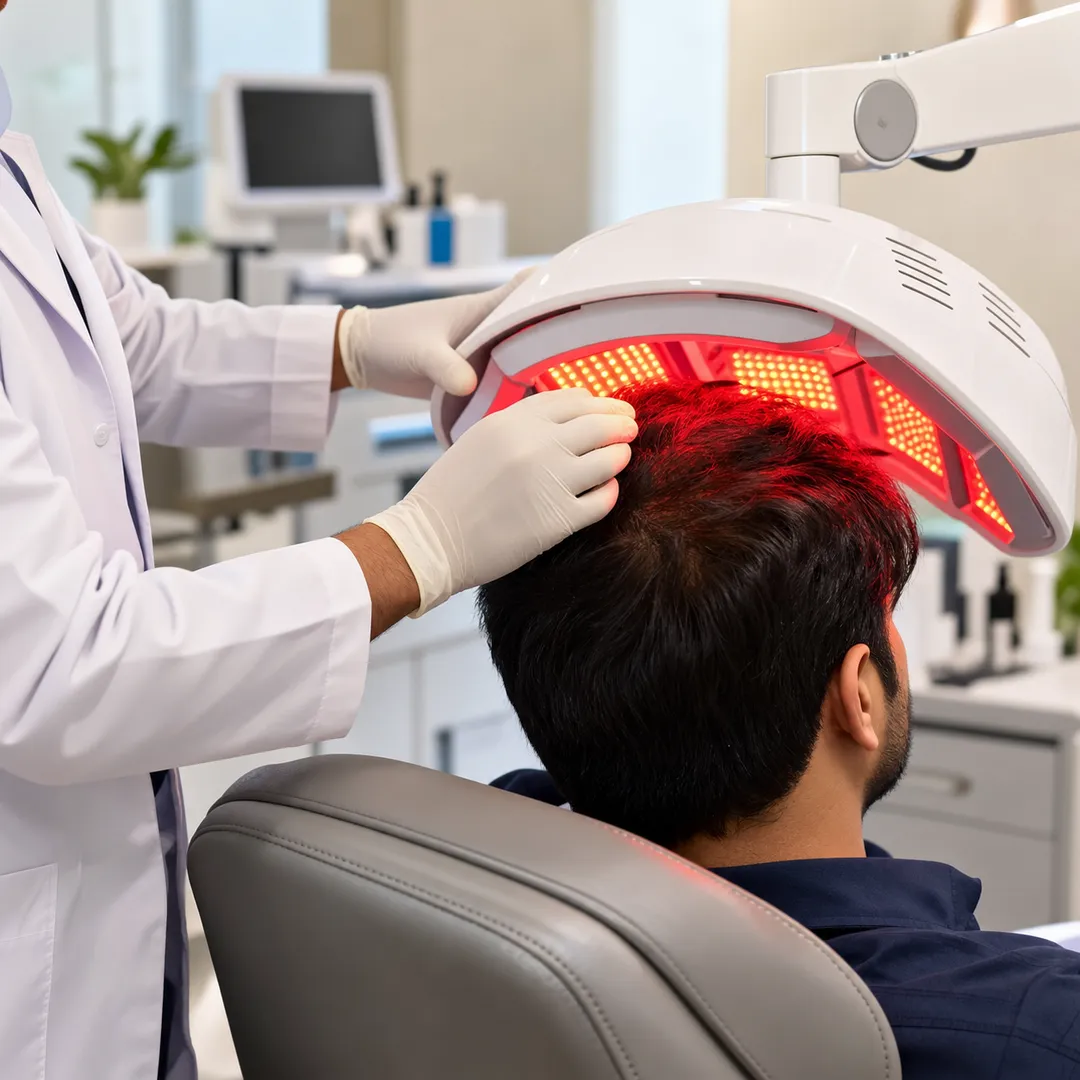
Hair thinning can lead people to try oils, supplements, salon therapies, plus multiple devices without first understanding why their hair is changing. Hair Light Treatment is a non-invasive approach sometimes considered within a broader hair-management plan.
Light-based hair therapy generally uses controlled wavelengths intended to interact with scalp tissue plus existing follicles. The exact technology, treatment protocol, suitability, plus expected benefit can differ significantly between systems.
For patients in Pancard Club Road, Pune, proper assessment should come before committing to repeated sessions.
Start With the Cause of Hair Loss
Hair loss is a symptom rather than one diagnosis.
Potential causes include
- Genetic pattern thinning
- Nutritional deficiencies
- Stress-related shedding
- Hormonal changes
- Thyroid-related concerns
- Scalp disorders
- Recent illness
- Medication-related shedding
- Significant weight changes
A treatment directed at follicles may not solve shedding caused by an untreated medical trigger.
What Is Hair Light Treatment Intended to Do?
Certain light-based hair systems are designed to expose the scalp to specific wavelengths at controlled settings.
The aim is generally to support follicular activity in areas where follicles remain viable.
Because devices differ, patients should ask what technology is being used rather than assuming every light treatment is identical.
A professional should also explain why the treatment has been recommended for the patient's specific hair-loss pattern.
What Should Be Checked Before Treatment?
A useful pre-treatment assessment may include
- Scalp examination
- Hair-loss pattern
- Duration of shedding
- Family history
- Hair density
- Hair-shaft thickness
- Current medications
- Diet history
- Previous treatments
- Recent illness
- Relevant laboratory investigations
Not every patient needs every investigation. Testing should be guided by clinical findings.
How Long Does Hair Recovery Take?
Hair growth occurs in cycles.
This means a procedure should not be judged based on a few days of treatment. Changes in shedding may appear before visible density changes.
Progress may be tracked through consistent photographs, hair-density assessment, plus clinical review.
A clinician should explain how long the proposed trial period will last before treatment effectiveness is assessed.
Avoid Choosing Treatment Based Only on Convenience
Non-invasive treatment may appear attractive because injections plus significant downtime are usually not central features of light-based therapy.
Convenience, however, should not replace clinical suitability.
Before beginning repeated sessions, ask
- What diagnosis is being treated?
- What device is being used?
- How frequently are sessions recommended?
- What improvement is realistic?
- How will results be monitored?
- Is supportive medical treatment needed?
- When will the plan be reviewed?
Clear answers help patients make a more informed decision.
Combination Hair-Care Plans
Some patients may be advised to combine light-based treatment with medical management, nutritional correction, scalp care, plus another procedure.
This does not mean every patient requires multiple therapies.
The treatment plan should reflect the underlying diagnosis plus stage of hair loss.
A person with early genetic thinning may require a different strategy from someone experiencing temporary shedding after illness.
Professional Assessment Near Pancard Club Road
DermaBright sees patients from Pancard Club Road plus nearby Pune neighbourhoods for concerns involving thinning, shedding, plus reduced hair density. A clinical evaluation can help determine whether Hair Light Treatment deserves a place within the patient's plan.
Patients should also discuss session frequency, treatment duration, home care, plus expected follow-up before starting.
Hair Light Treatment may provide a non-invasive option for selected patients, but the value of treatment depends upon proper diagnosis plus realistic expectations. Identifying the cause of thinning first can prevent months of trial-based treatment that does not address the underlying problem.
Keywords