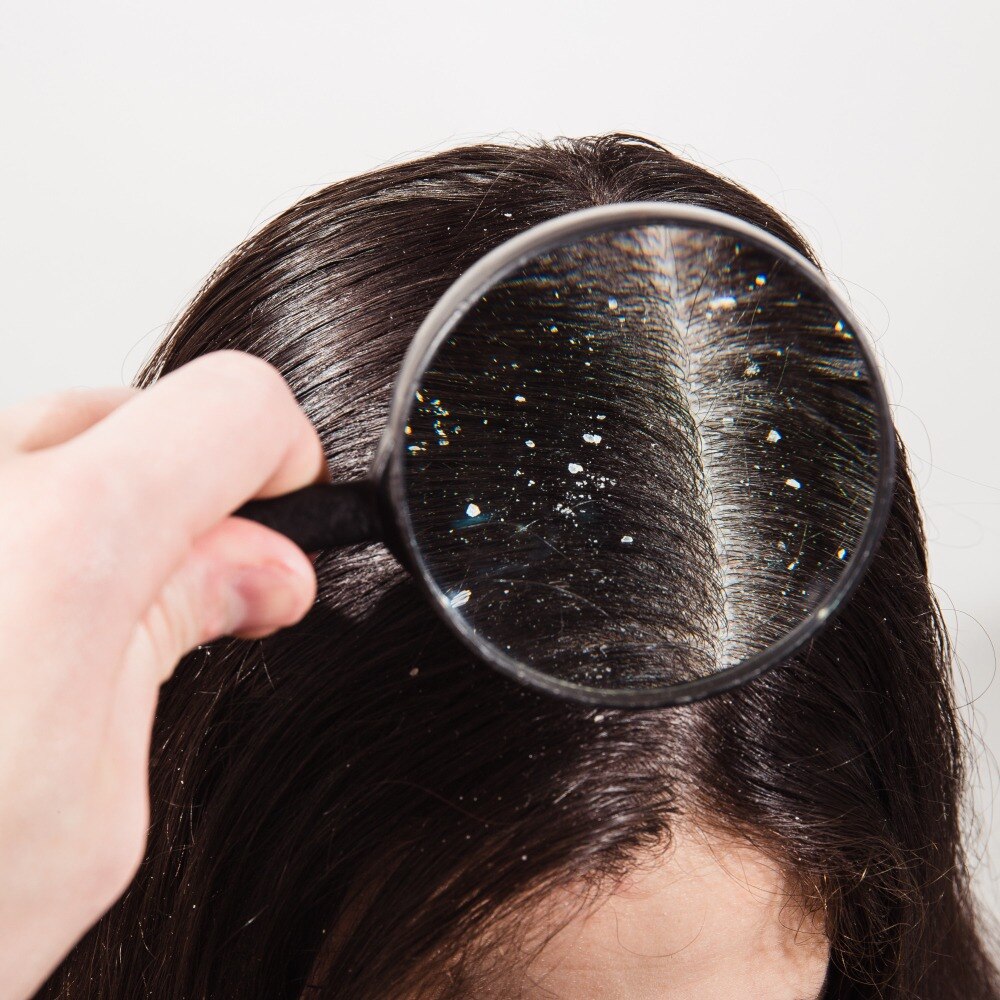
Flakes can result from yeast-associated inflammation, psoriasis, eczema, contact reactions, infection, dryness or product buildup, and the right treatment depends on which pattern you have. By comparing the scale, redness, hair changes and associated symptoms, you can decide when home Dandruff Treatment is reasonable and when examination or testing should come first.
Key takeaways
- Greasy yellow scale suggests a different cause than fine flakes on tight, dry skin.
- Stop a suspected hair product and track whether flaking improves over two weeks.
- Seek examination for hair loss, painful redness, pus, thick plaques, or spreading scale.
- Compare one active ingredient at a time and follow its label contact time.
What does the pattern of scalp flaking suggest?
The pattern of Scalp Flaking can narrow the cause before you choose a Dandruff Treatment. Look at the scale, the skin beneath it, where it appears, and whether hair changes accompany it.
| Cause | Pattern to compare | Treatment implication |
|---|---|---|
| Seborrhoeic dermatitis | Greasy yellow or white scale with redness around the scalp, eyebrows, ears, or beard | An antifungal shampoo may fit better than a product aimed only at dryness |
| Scalp psoriasis | Thick, sharply defined plaques with silvery-white scale; may extend beyond the hairline or affect elbows, knees, ears, or nails | Scale removal alone will not control the inflammation |
| Contact dermatitis | Burning, itching, or redness after dye, fragrance, oil, dry shampoo, or styling products; the hairline and ears may be prominent | Stop the suspected product and seek advice if the reaction persists |
| Tinea capitis | Broken hairs, patchy hair loss, tenderness, crusting, or pustules | Requires clinical assessment and fungal testing rather than shampoo switching |
| Dry scalp | Fine, loose flakes with tightness after hot water, frequent washing, harsh cleansers, or dry air | Reduce irritation and restore moisture instead of escalating medicated products |
Do not treat every visible scale as proof of dandruff. Salicylic acid loosens scale but does not address every underlying cause, and frequent use can irritate the scalp. Apply any shampoo directly to the scalp and leave it for the label’s stated contact time; coating only the hair lengths leaves the affected skin undertreated.
Could dryness or a hair product be causing the flakes?
Small, powdery flakes with tightness after cold, low-humidity weather point more toward a dry scalp than ordinary dandruff. Hot water, frequent washing and harsh cleansers can strip surface oils and worsen dryness.
Dandruff more often produces itch, redness and larger white or yellowish greasy scale on an oily scalp; it is linked to inflammation involving sebum and Malassezia yeasts, not poor hygiene.
| Dry scalp | Irritant or allergic contact dermatitis | Ordinary dandruff |
|---|---|---|
| Fine, dry flakes and tightness; worsens with low humidity, hot water or harsh cleansers | Burning, intense itch, redness, swelling or weeping after dye, bleach, relaxers, fragrance, oils or a new shampoo | Itch with recurrent white or yellowish scale, redness and an oilier scalp |
| Improves when irritating washing habits are corrected | Improves after stopping the responsible product; recurrent allergy may need patch testing | Needs consistent Dandruff Management directed at the scalp |
A product reaction deserves more attention than flake size alone. Irritant dermatitis can follow direct chemical damage, while allergic dermatitis reflects sensitivity to an ingredient and can recur with small exposures. Stop the suspected product, photograph the scalp, and record the product name, ingredient list, application date and symptom onset.
Persistent inflammation, spreading rash or weeping needs clinical assessment.
A Healthy Scalp means minimal itch and inflammation, intact skin and no progressive hair loss—not a completely flake-free scalp after one wash. Do not scrape or scratch; broken skin can become infected.
Which warning signs mean you need a scalp examination?
Arrange a dermatologist’s assessment when Scalp Flaking persists despite following an appropriate over-the-counter shampoo’s label directions, or when symptoms are worsening instead of settling. Repeatedly switching products can delay the correct diagnosis and further irritate the skin.
| Warning sign | Why examination matters | What may be needed |
|---|---|---|
| Marked redness, pain, crusting, oozing or pustules | Suggests active inflammation, infection or a more severe dermatitis | Direct examination and treatment selection |
| Patchy hair loss, broken hairs or black dots | Raises concern for tinea capitis or another hair-shaft disorder | Fungal microscopy or culture when tinea capitis is suspected |
| Tender swelling or enlarged neck lymph nodes | Can accompany inflammatory or infectious scalp disease | Prompt clinical assessment |
| Thick, sharply defined plaques or scale beyond the hairline | Does not fit simple dandruff reliably | Assessment for psoriasis, dermatitis or another condition |
| Severe itch with scratches, open areas or bleeding | Scratching damages the barrier and increases secondary-infection risk | Examination and an itch-control plan |
| Recurrent flares after hair dye, fragrance, oils or styling products | Points toward allergic or irritant contact dermatitis | Product review and, if indicated, patch testing |
Do not scrape aggressively or assume a scale-lifting product has treated the cause; salicylic acid can worsen irritation when overused. A Healthy Scalp is judged by minimal itch and inflammation, intact skin and no progressive hair loss, not by having zero flakes after one wash.
Children with patchy loss, pustules or tender swelling need prompt assessment because antifungal shampoo alone does not treat tinea capitis.
How should you compare dandruff-treatment ingredients safely?
The active ingredient determines what a shampoo can fix. Antifungal ingredients target yeast-associated dandruff; a scale-lifting ingredient removes buildup but does not control the underlying inflammation or yeast.
| Ingredient | Main action | Safety point |
|---|---|---|
| Ketoconazole | Reduces yeast linked with dandruff | Use the label schedule; more frequent washing is not automatically better |
| Selenium sulfide | Reduces yeast and scalp scaling | Rinse thoroughly and avoid eyes |
| Zinc pyrithione | Helps reduce yeast, itch and scaling | Apply to the scalp, not only the hair lengths |
| Coal tar | Slows excessive skin-cell buildup and reduces scaling | It can irritate, stain light hair or increase sun sensitivity |
| Salicylic acid | Loosens and removes attached scale | Overuse can sting and worsen irritation; it does not replace antifungal treatment |
Choose a product that matches the likely problem, then follow its label rather than combining several medicated shampoos at once. Work the shampoo into the scalp and leave it on for the stated contact time, often several minutes, before rinsing. Keeping it on too briefly can make an effective Dandruff Treatment appear useless.
- Stop a product if burning, swelling or a spreading rash develops.
- Do not scratch off thick scale or apply salicylic acid to broken skin.
- If one active ingredient fails after the label-directed trial, try or alternate a different active with dermatology guidance rather than abandoning Dandruff Management after one wash.
- Persistent flaking, pain or hair loss needs examination instead of stronger self-treatment.
How do you build a sustainable plan for a healthy scalp?
After improvement, keep a four-week scalp log: record wash days, the active ingredient used, contact time, itch, redness, scale and shedding. A Healthy Scalp is judged by the trend, not by a flake-free morning: aim for minimal itch and inflammation, intact skin, and no progressive hair loss.
Continue maintenance Dandruff Management at the label’s frequency when it prevents relapse.
Do not treat scale removal as complete Dandruff Treatment. Salicylic-acid products can irritate when used too often or combined with other irritating treatments, while aggressive scratching can break the skin and invite infection. Apply medicated shampoo to the scalp, leave it on for the label’s stated time, then rinse.
Arrange an assessment instead of repeatedly switching products when flaking continues, or when redness, pain, crusting, oozing, patchy hair loss or broken hairs appear. DermaBright-Skin Hair Body Specialist 08048128125 can help separate active scalp inflammation from a separate hair-loss concern before you consider services such as PRP or scalp microblading.
Ask what examination supports the diagnosis and whether fungal microscopy or culture is needed when tinea capitis is suspected. Stabilise the scalp condition first; cosmetic or hair-growth procedures should not distract from an untreated cause.
Related service
Hair Treatments If you are struggling with persistent flakes, itchy scalp, or recurring dandruff, Derma Bright – Skin Hair Laser Clinic in Baner, Pune offers... View service → |
Frequently asked questions
What does the pattern of scalp flaking suggest?
Fine white flakes with tight skin point toward dryness, while greasy yellow scale, redness, and recurring itch fit seborrheic dermatitis. Thick plaques, sharply defined patches, or scale beyond the hairline require examination because psoriasis, fungal infection, or another scalp condition can look similar.
Could dryness or a hair product be causing the flakes?
Yes. Hot water, frequent shampooing, harsh cleansers, fragranced products, oils, gels, and hair dye can irritate or dry the scalp. Stop one suspected product at a time and monitor the scalp for about two weeks.
Which warning signs mean you need a scalp examination?
Arrange a scalp examination for patchy hair loss, broken hairs, painful swelling, pus, bleeding, thick plaques, severe redness, scale spreading beyond the hairline, or symptoms that persist despite correct dandruff treatment.
How should you compare dandruff-treatment ingredients safely?
Check the active ingredient and label directions. Ketoconazole targets yeast linked with seborrheic dermatitis; zinc pyrithione, selenium sulfide, salicylic acid, and coal tar work differently. Use one medicated shampoo at a time, keep it on the scalp for the stated contact time, and stop if you develop marked burning or swelling.
How do you build a sustainable plan for a healthy scalp?
Identify triggers, wash at a frequency that removes oil without stinging, apply shampoo to the scalp rather than the hair lengths, rinse thoroughly, and record flare-ups. Seek professional guidance when symptoms recur, worsen, or do not respond to label-directed care.
Keywords