Uneven facial tone can come from sun exposure, acne-related inflammation, hormonal pigmentation or a lesion that needs medical assessment, so the same peel is not suitable for every brown mark. By the end, you will know what a Yellow Peel Treatment contains, how the appointment works, what aftercare involves and when another Pigmentation Care plan is safer.
Key takeaways
- Choose a superficial peel when pigmentation sits mainly in the epidermis.
- Ask which acids are used and how the provider will protect your skin barrier.
- Use gentle cleansing, daily sunscreen, and no picking during peeling.
- Deep melasma, raised lesions, or changing spots need a different assessment.
What a Yellow Peel Treatment does to uneven facial pigmentation
A Yellow Peel Treatment is usually a superficial chemical peel designed to work mainly in the epidermis, the outer skin layer. It loosens pigmented surface cells and can reduce the visual intensity of excess melanin after sun exposure or inflammation.
It does not bleach your natural skin colour or strip healthy pigment from unmarked skin, so Skin Brightening means a more even appearance, not permanent whitening.
“Yellow peel” is a treatment label, not one standard formula. What happens to your pigmentation depends on:
- the active ingredients and their concentration or pH;
- how long the product remains on your skin; and
- whether the target is superficial epidermal pigment rather than pigment deeper in the dermis.
By lifting some pigmented surface cells and supporting more even renewal, a superficial peel can make brown patches and post-acne marks look lighter over a course of treatments. It cannot reliably remove deep dermal pigment or permanently prevent new pigment from forming.
An overly strong peel can inflame skin and trigger darker marks, especially in medium-to-deep skin tones, so conservative strength, test-area assessment and daily sun protection matter. Promises of instant melasma removal or guaranteed whitening are warning signs.
What is in the peel, and what happens during the appointment?
A Yellow Peel Treatment is a protocol name, not a single standard recipe. A Chemical Peel sold under this label may combine retinoic acid, kojic acid, azelaic acid, phytic acid, salicylic acid or other pigment-targeting agents.
Ask for each ingredient, its concentration, pH, contact time and whether the product is removed in the clinic or left on at home.
| Ingredient | Intended role | Detail to confirm |
|---|---|---|
| Retinoic acid | Increases epidermal cell turnover | Concentration and leave-on or removal instructions |
| Kojic, azelaic or phytic acid | Supports pigment control through different pathways | Exact ingredient and strength |
| Salicylic acid | Loosens surface cells and clears excess oil | Concentration, pH and neutralisation method |
| Other depigmenting agents | Targets melanin formation or transfer | Name, concentration and irritation risks |
The practitioner selects the formula after examining your pigmentation, sensitivity, acne, current skincare and medication history. If it contains a retinoid or strong depigmenting agent, disclose pregnancy, breastfeeding, allergies and every active product you use; combining acids, retinoids or abrasive products can trigger dermatitis and darker post-inflammatory marks.
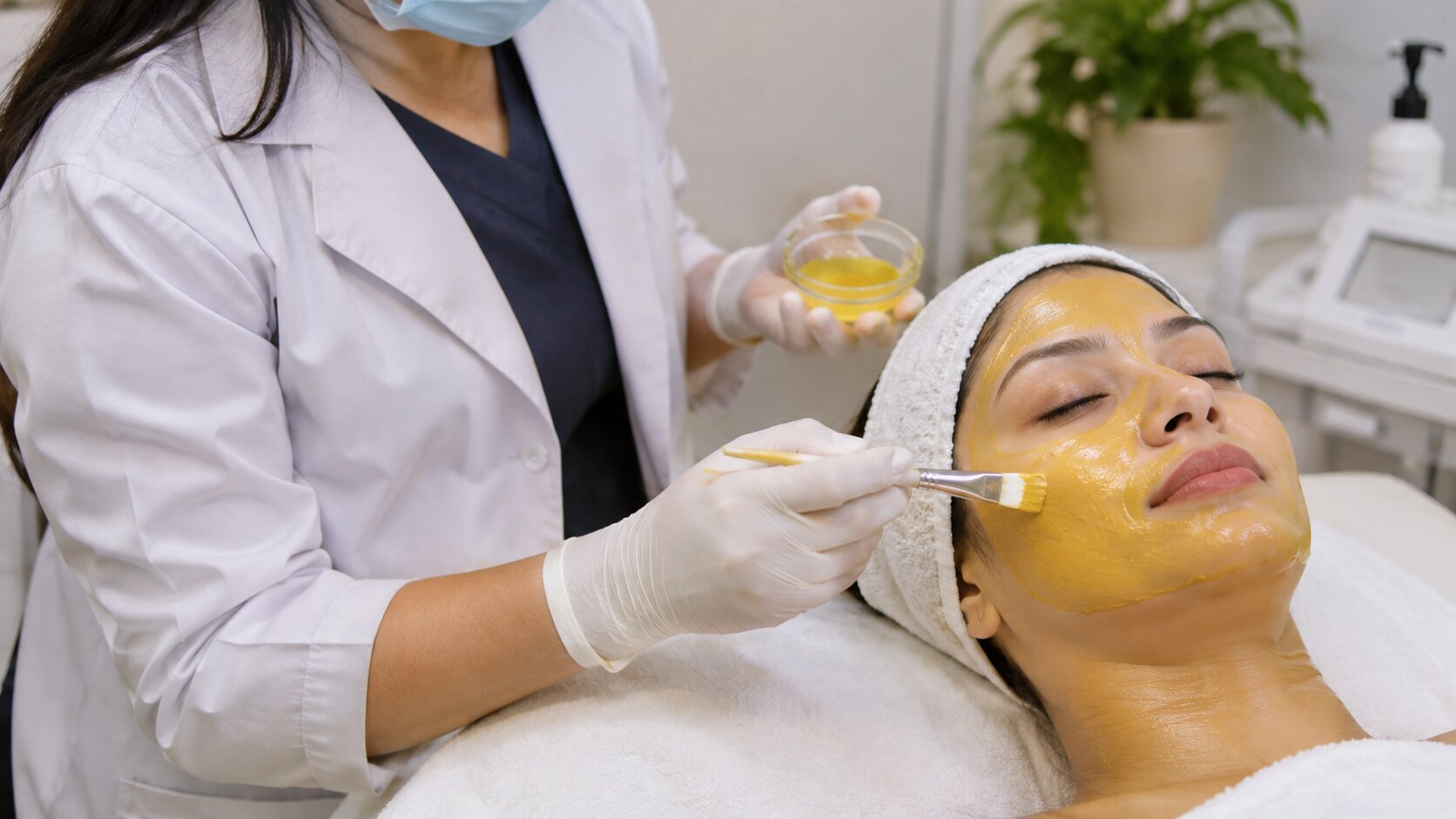
- The appointment begins with consultation, photography or assessment, cleansing and degreasing.
- The practitioner protects sensitive areas, applies the measured peel evenly and records the contact time.
- The product is removed, neutralised or kept on according to that formula’s instructions; there is no universal “yellow peel” removal time.
- A bland moisturiser and sunscreen finish the visit, with written instructions stating exactly when and how to wash your face.
What will your skin feel like, and how do you wash and protect it afterward?
Tingling, warmth, tightness and mild stinging are common during the first hours after a Chemical Peel. Your face may look pink or slightly swollen, then feel dry; superficial flaking or darker-looking patches can appear over the next several days as pigmented surface cells shed. Do not pull peeling skin.
Yellow Peel removal depends on the exact formula and contact-time instructions. The practitioner may remove or neutralise it during the appointment, or instruct you to wash it off at home after a stated number of hours. Do not leave it on overnight or rinse it early unless those instructions say so.
| Change | Usually expected | Contact the practitioner |
|---|---|---|
| Sensation | Mild warmth, tightness or tingling that settles | Severe burning, increasing pain or marked swelling |
| Appearance | Pinkness, dryness, light flaking or temporary darkening | Blisters, oozing, spreading redness or pus |
| Pigment | Gradual fading after healing | New pale patches or darkening that continues beyond the expected recovery |
After removal, wash with lukewarm water and a fragrance-free gentle cleanser; use your fingertips, rinse thoroughly and pat dry. Apply the bland moisturiser recommended for you. Avoid scrubs, brushes, waxing, hot water, swimming and products containing retinoids, exfoliating acids, benzoyl peroxide or fragrance until the skin has healed or the clinician approves them.
Use broad-spectrum SPF 30 or higher every morning, reapply outdoors, and add a hat, protective clothing and shade. For light-sensitive pigmentation, a tinted sunscreen containing iron oxides supports Skin Brightening aftercare by reducing visible-light exposure. Conservative care matters because inflammation can leave prolonged dark or light marks, especially in medium-to-deep skin tones.
Which pigmentation patterns suit this treatment, and which need another plan?
A Yellow Peel Treatment best suits superficial, fairly uniform colour: recent tanning, dullness, and mild post-acne marks that sit in the epidermis and are fading after the acne settles. It will not reliably correct deep dermal pigment, and inflammation from an overly strong peel can create darker or lighter patches, especially in medium-to-deep skin tones.
| Pattern | Clues | Safer plan |
|---|---|---|
| Superficial tanning | Even brownness after sun exposure; no growth, scale or marked asymmetry | Yellow Peel Treatment with strict sun protection |
| Mild post-acne marks | Flat brown spots exactly where healed pimples were; no active rash | Treat acne and consider conservative Pigmentation Care |
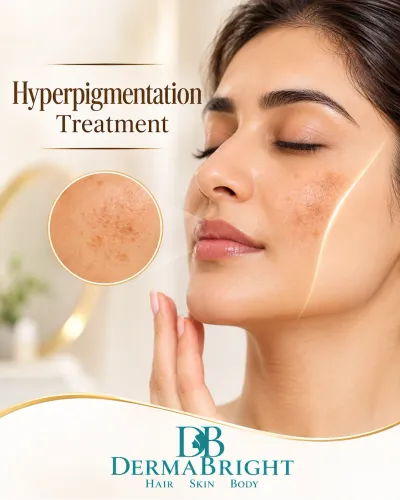
| Melasma | Symmetrical tan-brown patches on cheeks, forehead, upper lip or jaw; recurring with sun or heat | Medical assessment, pigment control and rigorous visible-light protection; peeling is only one possible component |
| Persistent post-inflammatory hyperpigmentation | Marks remain after eczema, burns, waxing or irritation, or continue to darken | Find and stop the trigger before peeling |
| Medication-related pigmentation | New, widespread or unusually patterned colour after starting a drug or supplement | Review the medicine with the prescriber; do not stop it independently |
| Changing lesion | One spot becomes larger, darker, asymmetric, raised, itchy or bleeds | Dermatology examination before any peel |
Ask for an assessment under good lighting, with medication and skincare history recorded. A tinted sunscreen containing iron oxides helps protect melasma from visible light; SPF 30 or higher, shade and clothing reduce recurrence. A suspicious or uncertain mark needs diagnosis first, not cosmetic treatment.
How many sessions should you plan, and how do you choose a safe provider?
Plan on two to four sessions, not a one-off fix. A realistic timeline is six to twelve weeks, with sessions commonly spaced three to four weeks apart so peeling, redness and pigment response can settle before the next application. The exact interval depends on the formula, contact time and your skin’s reaction.
| Treatment course | What to expect | When to reassess |
|---|---|---|
| Two sessions | Early improvement in superficial uneven tone | After the second session |
| Three to four sessions | More noticeable, incremental change | At each appointment |
| No improvement or darker patches | Stop rather than intensify treatment | Arrange medical review |
Do not commit until the clinic answers these questions clearly:
- Which ingredients are in this Chemical Peel, and what are their concentrations and pH?
- Is the product removed in the clinic, neutralised, or left on overnight?
- What interval will you use between sessions, and what finding would make you postpone the next one?
- Who will examine the pigmentation before Pigmentation Care, and how will you handle suspected melasma, infection or a changing mole?
- What is your written aftercare plan for cleansing, moisturiser, SPF 30 or higher, shade and reapplication?
Ask about recent sun exposure, eczema, active acne wounds, cold sores, medicines and previous darkening after procedures. DermaBright-Skin Hair Body Specialist 08048128125 in Pune should be judged by these specific answers and documented consent, not by the treatment name alone.
Related service
Skin Treatments Chemical Peels Treatment Specialist In Baner, Aundh, Pashan, Balewadi Chemical Peels Treatment Specialist in Baner, Pune – Advanced Skin Renewal at DermaBright – Skin Hair Laser Looking for the best chemical peel... View service → |
Frequently asked questions
What does a Yellow Peel Treatment do for uneven facial pigmentation?
It is usually a superficial chemical peel that loosens pigmented epidermal cells and can reduce the visible intensity of pigmentation caused by sun exposure or inflammation.
What should you expect during and after a Yellow Peel appointment?
The provider cleanses the skin, applies the peel for a planned time, and explains whether it will be removed immediately or left on. Your skin may feel warm, tight, dry, or mildly irritated afterward. Wash gently, avoid picking, and use broad-spectrum sunscreen as directed.
Which pigmentation patterns suit a Yellow Peel Treatment?
Surface-level uneven tone and pigmentation after sun exposure or inflammation can suit this approach. Deep melasma, raised or changing spots, and pigmentation from an untreated skin condition need assessment and a different plan.
How many Yellow Peel sessions do you need?
The number depends on pigmentation depth, skin sensitivity, the peel formula, and your response. A safe provider should assess your skin before recommending a session schedule rather than promising a fixed result.
Keywords