Depressed acne scars, rough texture and post-acne marks do not respond to the same treatment, so identifying the skin problem comes before choosing a procedure. By the end, you will know how MNRF works, which scars it can address, what recovery involves and what to ask before booking a session.
Key takeaways
- MNRF combines controlled needle punctures with radiofrequency heat in the dermis.
- It suits selected depressed acne scars and uneven texture, not every scar type.
- Assess texture changes after collagen remodeling, not immediately after redness fades.
- Ask about needle depth, energy settings, sterile cartridges, risks and aftercare.
What MNRF does beneath the skin and what happens during treatment
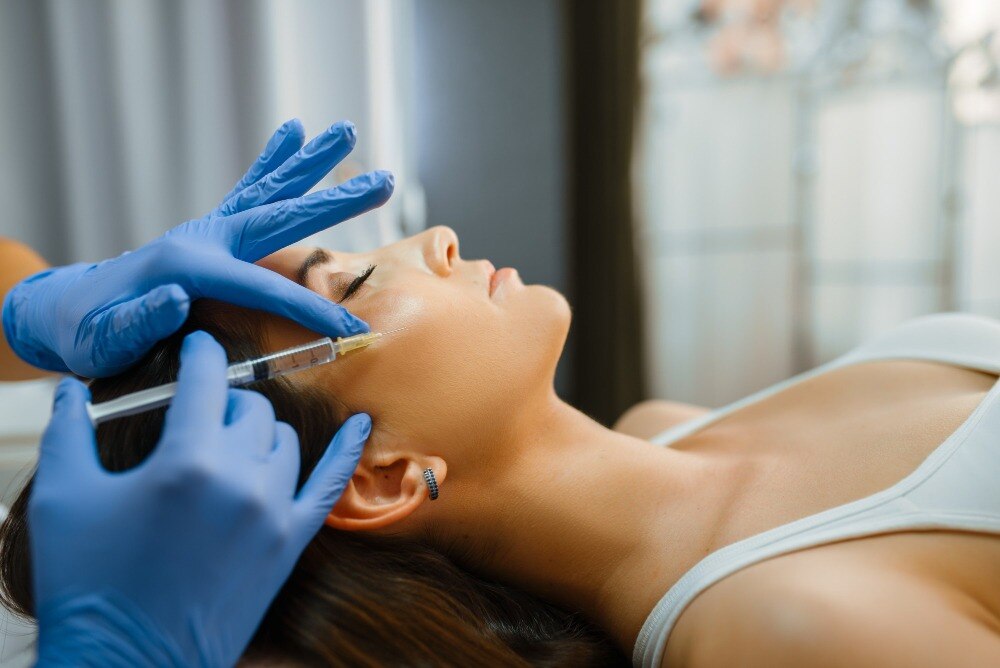
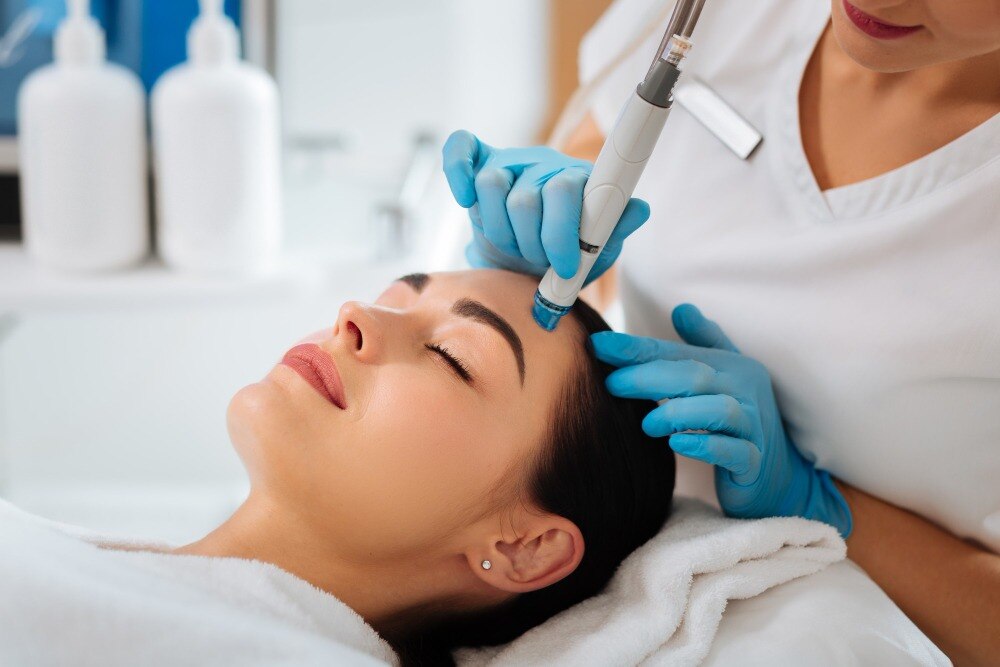
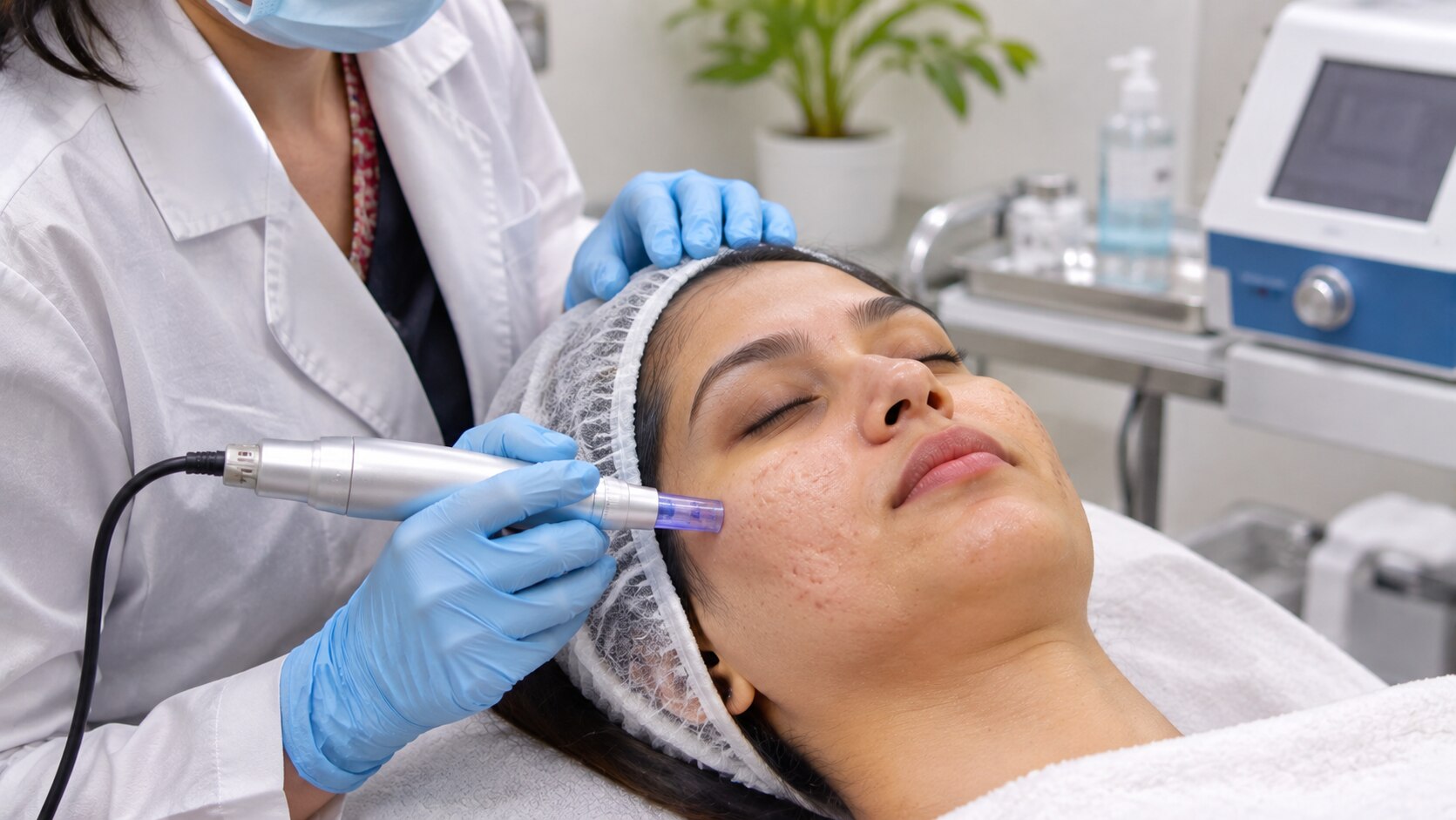
MNRF Face Treatment combines fractional microneedling with radiofrequency energy. Insulated or non-insulated needles make controlled punctures and release heat into the dermis, supporting collagen remodeling below the surface. Ordinary microneedling relies mainly on mechanical micro-injury and does not add this thermal component.
| Treatment | Main action | Key distinction |
|---|---|---|
| MNRF or Radiofrequency Microneedling | Needles puncture skin and deliver RF heat into the dermis | Depth and energy depend on the device and settings |
| Ordinary microneedling | Needles create mechanical micro-injuries | No delivered RF heat |
| Surface RF facial | Electrodes warm the skin surface or superficial tissues | No needle-based, fractional delivery into selected dermal depths |
A session usually follows this sequence:
- The clinician examines the scar pattern, skin area, skin type and treatment history, then checks for active acne, open lesions or infection. Treatment should wait if inflamed or infected skin is present.
- The skin is cleansed, and topical anaesthetic is applied for the planned contact time.
- The clinician selects needle depth, energy level, pulse duration and insulated or non-insulated tips. One fixed setting is unsuitable for every scar or body area.
- The handpiece makes treatment passes across selected zones. The clinician checks the endpoint, such as the response of each area, rather than treating blindly.
- Cooling follows the passes, alongside instructions for washing, moisturising, sun protection and avoiding irritating products during recovery.
Needle-based Radiofrequency Microneedling is a medical procedure, not a routine RF facial. Device design and operator training affect heat distribution, results and risks such as burns or post-inflammatory pigmentation.
Which acne scars and post-acne changes are suitable for MNRF
Start by identifying whether the problem is a depressed scar or a colour change. A depressed scar reflects altered collagen structure and may cast a shadow; a red or brown post-acne mark is a colour change that may respond better to vascular or pigment-focused treatment than to MNRF Face Treatment.
| Scar type | How it appears | Likely treatment direction |
|---|---|---|
| Rolling | Broad, shallow depressions with soft edges | MNRF may help; subcision is important when fibrous bands tether the skin |
| Shallow boxcar | Wider depression with a defined edge | MNRF can improve texture and depth |
| Deep boxcar | Deeper, sharply defined depression | Punch elevation, punch excision or combination treatment may be needed |
| Narrow, deep ice-pick | Small opening extending deeply into the skin | TCA CROSS or punch excision often fits better because MNRF cannot reshape the entire defect |
| Shallow ice-pick | Narrow depression that does not extend deeply | MNRF may provide limited improvement after examination |
MNRF is not a universal Acne Scar Treatment. It is principally used for atrophic scars, and the clinician must match the method to scar depth, tethering and skin condition rather than treat every mark with the same procedure.
Control active, inflamed or cystic acne before any invasive scar procedure. MNRF does not replace acne treatment; treating infected or inflamed lesions increases complications, and new breakouts can create new scars. A clinician should postpone treatment until the skin is sufficiently settled.
What skin texture improvement looks like and when to assess it
Skin Texture Improvement from MNRF is gradual collagen remodeling, not instant resurfacing. The controlled injury and thermal stimulation can soften unevenness over time, but they will not restore skin to its pre-acne appearance in one appointment. Swelling, redness, tenderness and a rough surface can briefly make the texture look worse before it settles.
Assess progress in stages:
- During the first days, judge healing rather than results. Early photographs show treatment-related redness, swelling or crusting, not the final texture.
- After several weeks, compare photographs taken in the same lighting and angle. The surface may begin to feel smoother, but collagen remodeling is still continuing.
- After a treatment series, review progress over weeks to months. The clinician can then decide whether another session is appropriate, spacing treatments according to healing and treatment intensity rather than promising one fixed number.
The outcome depends on scar depth, fibrous tethering, skin type, device settings and aftercare. MNRF may modestly improve enlarged pores, fine lines and general irregularity, but it is not universal Acne Scar Treatment. Pigment-only brown marks, vascular redness, active acne and deep tethered scars may need pigment-focused, vascular, acne-control, subcision or other combined treatments.
A consistent photographic record and a clinician’s examination provide a more reliable assessment than mirror checks during recovery.
Recovery, preparation and safety checks after RF microneedling
Downtime after Radiofrequency Microneedling is not zero. Expect warmth, redness, tenderness, swelling, pinpoint marks or bleeding, crusting, and a rough-feeling surface; duration depends on treatment settings and your healing.
- Before treatment, disclose recent tanning, retinoid or irritating-product use, pigmentation history, herpes-virus outbreaks, all medications, bleeding disorders, poor wound healing, keloids, pregnancy, and implanted electrical devices. These details can change the plan or require medical review.
- Postpone treatment for an active skin infection or uncontrolled inflammatory acne. Treating inflamed or infected skin increases complications and can create new scars.
- Follow the clinic’s exact washing, cooling, moisturising, and makeup instructions. Apply sunscreen as directed, avoid deliberate UV exposure, and do not pick marks or crusts.
- Avoid heat, strenuous exercise, unapproved retinoids, acids, and other irritating actives until the skin barrier has recovered. Reintroducing them too early can prolong inflammation and worsen uneven pigmentation.
RF microneedling suits many skin tones because radiofrequency energy enters through needles rather than relying mainly on surface pigment absorption. Excessive energy, poor technique, inadequate cooling, or poor aftercare can still cause burns, post-inflammatory hyperpigmentation, scarring, fat loss, or nerve injury.
This is a medical procedure, not a routine facial; ask who is qualified to perform it and when your skin is ready for Skin Texture Improvement.
What to ask before choosing an MNRF provider
Before booking, ask who will perform the procedure, what medical training they hold, and which licence authorises them to provide it. Request the exact device name, whether its needles are insulated or non-insulated, and how the clinician will choose needle depth, energy and pulse duration for your scars, skin type and treatment area.
Use this checklist during consultation:
- Ask the clinician to identify every scar type and distinguish depressed scars from red or brown marks.
- Ask whether subcision, TCA CROSS, punch elevation, punch excision, acne control or pigment treatment belongs in your Acne Scar Treatment plan.
- Ask how many sessions they expect, the likely downtime, and when photographs and reviews will assess progress.
- Confirm the clinic’s method for cooling, sterile or single-use needle handling, infection prevention, eye protection, device safety and managing burns, prolonged redness or other adverse reactions.
- Disclose active acne, infection, keloids, poor wound healing, bleeding disorders, medicines, pregnancy and implanted electrical devices.
Scar pattern should drive the plan, not a generic promise:
| Scar type | Possible approach | Why MNRF alone may be insufficient |
|---|---|---|
| Rolling or tethered | MNRF with subcision | Fibrous bands need release |
| Shallow boxcar | MNRF | Remodeling may soften broad edges |
| Deep boxcar | Punch elevation or excision, sometimes combined | The defect is too deep for uniform remodeling |
| Ice-pick | TCA CROSS or punch excision | A narrow channel needs targeted treatment |
In Pune, a consultation with DermaBright-Skin Hair Body Specialist 08048128125 can help you review these questions before choosing MNRF Face Treatment. Decide only after examination of active acne, scar morphology, skin history and goals.
Related service
Skin Treatments Microneedling Treatment Specialist In Baner, Aundh, Pashan, Balewadi Best Microneedling Treatment Specialist in Baner, Pune | DermaBright – Skin, Hair & Laser Clinic Looking for the best microneedling treatment... View service → |
Frequently asked questions
What does MNRF do beneath the skin?
MNRF uses microneedles to create controlled punctures and delivers radiofrequency heat into the dermis, supporting collagen remodeling.
Which acne scars are suitable for MNRF?
MNRF is used for selected depressed acne scars and uneven texture. A clinician must assess scar depth, tethering, pigmentation risk and active acne before treatment.
When should you assess skin texture improvement after MNRF?
Wait for early redness and swelling to settle, then assess changes over the collagen-remodeling period rather than judging results immediately.
What should you ask before choosing an MNRF provider?
Ask about the clinician's experience, device and needle type, treatment settings, sterile single-use cartridges, expected sessions, risks, aftercare and emergency support.
Keywords